Most pharmaceutical procurement strategies are outdated. Here’s how digital tools, data, and supplier intelligence are redefining sourcing decisions.
Pharmaceutical procurement is shifting from relationship-based, reactive purchasing to a more structured, data-informed model.
Procurement teams must still manage price, quality, and regulatory compliance, but they are also expected to anticipate shortages, compare sourcing options across markets, and reduce dependence on individual suppliers.
A modern pharmaceutical procurement strategy brings these responsibilities together. It combines qualified supplier networks, reliable market intelligence, clear sourcing controls, and digital workflows that help teams make faster, better-documented decisions.
What Is Pharmaceutical Procurement?
Pharmaceutical procurement is the process of identifying, evaluating and sourcing medicines or pharmaceutical products from approved manufacturers, wholesalers and distributors.
Depending on the organisation, the process can include:
- Defining product and supply requirements
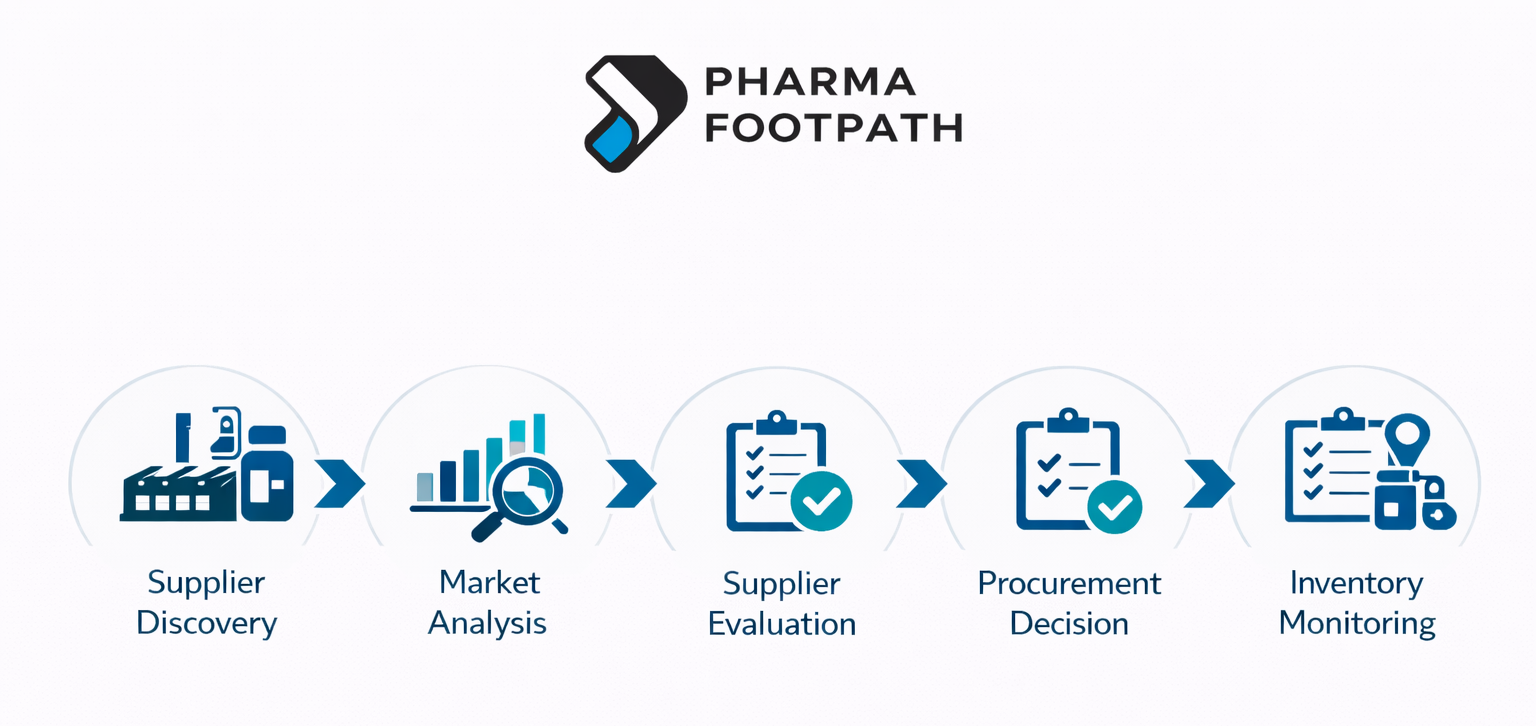
- Identifying potential suppliers
- Confirming product registrations and market authorisations
- Evaluating supplier qualifications
- Comparing prices and commercial terms
- Assessing availability and shortage risk
- Managing contracts, orders and supplier performance
Unlike conventional purchasing, pharmaceutical procurement operates within strict quality, regulatory and traceability requirements.
Price matters, but it cannot be evaluated separately from product compliance, supplier reliability, and continuity of supply.
What Is Pharmaceutical Procurement Transformation?
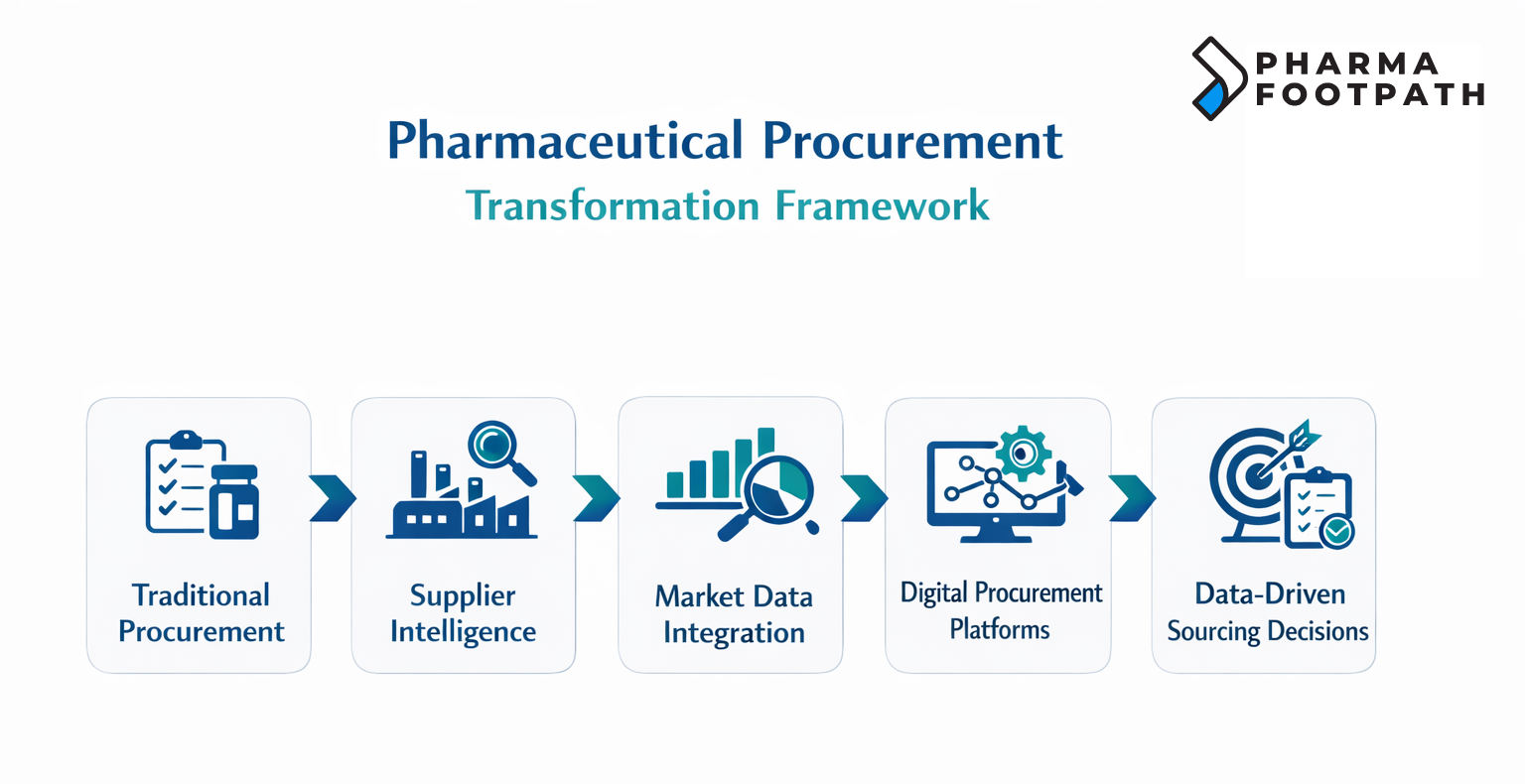
Pharmaceutical procurement transformation is the shift from fragmented, largely manual sourcing to a coordinated, data-driven procurement model.
Traditional processes often rely on spreadsheets, email communication, established distributor relationships, and separate regulatory or pricing databases.
This makes it difficult to compare markets, identify alternatives or respond quickly when supply conditions change.
Procurement transformation improves how sourcing information is collected, evaluated, and shared. It does not simply mean installing new software. It requires changes across data, processes, supplier governance and decision-making.
A successful transformation normally addresses four areas:
- Data: Creating access to reliable product, price, supplier and regulatory information.
- Processes: Standardising sourcing, supplier evaluation and approval workflows.
- Technology: Reducing manual research and consolidating fragmented information.
- Governance: Establishing clear responsibilities, controls and performance measures.
Why Pharmaceutical Procurement Strategies Are Changing
Pharmaceutical procurement teams are working in an increasingly complex supply environment.
Medicine shortages, regulatory differences, price variations and fragmented supplier networks can limit the value of relying only on historical suppliers or local market knowledge.
The main pressures driving procurement transformation include:
Medicine shortages and supply disruption
Shortages can arise from manufacturing problems, capacity constraints, quality issues, changes in demand or distribution interruptions.
Procurement teams therefore need processes to monitor official shortage information, evaluate supply risk, and investigate qualified alternatives. Sources such as the FDA Drug Shortage Database and the European Shortages Monitoring Platform provide important regulatory context.
Limited visibility across markets
Product availability, registrations, pack configurations and prices can differ between countries. When this information is held in separate systems, cross-market comparisons become slow and difficult.
Better market visibility helps procurement teams determine whether an apparent sourcing opportunity is commercially and operationally relevant before beginning supplier discussions.
Supplier concentration
Excessive dependence on one supplier, manufacturer or market can increase exposure to disruption.
Supplier diversification can improve resilience, but adding more vendors without appropriate qualification and governance may create new compliance and operational risks.
Diversification must therefore be selective, not simply an increase in the number of suppliers.
Regulatory complexity
A product available in one country may have a different registration number, authorised presentation or commercial status elsewhere.
Procurement teams must confirm that products and suppliers meet applicable regulatory, quality, and distribution requirements.
Market intelligence can support the initial investigation, but it does not replace formal supplier qualification or regulatory review.
Pricing pressure
Pharmaceutical prices can vary considerably between markets, product presentations and distribution channels.
A lower listed price does not automatically represent a better sourcing decision. Procurement teams must also consider logistics, lead times, pack compatibility, regulatory requirements, payment terms and continuity of supply.
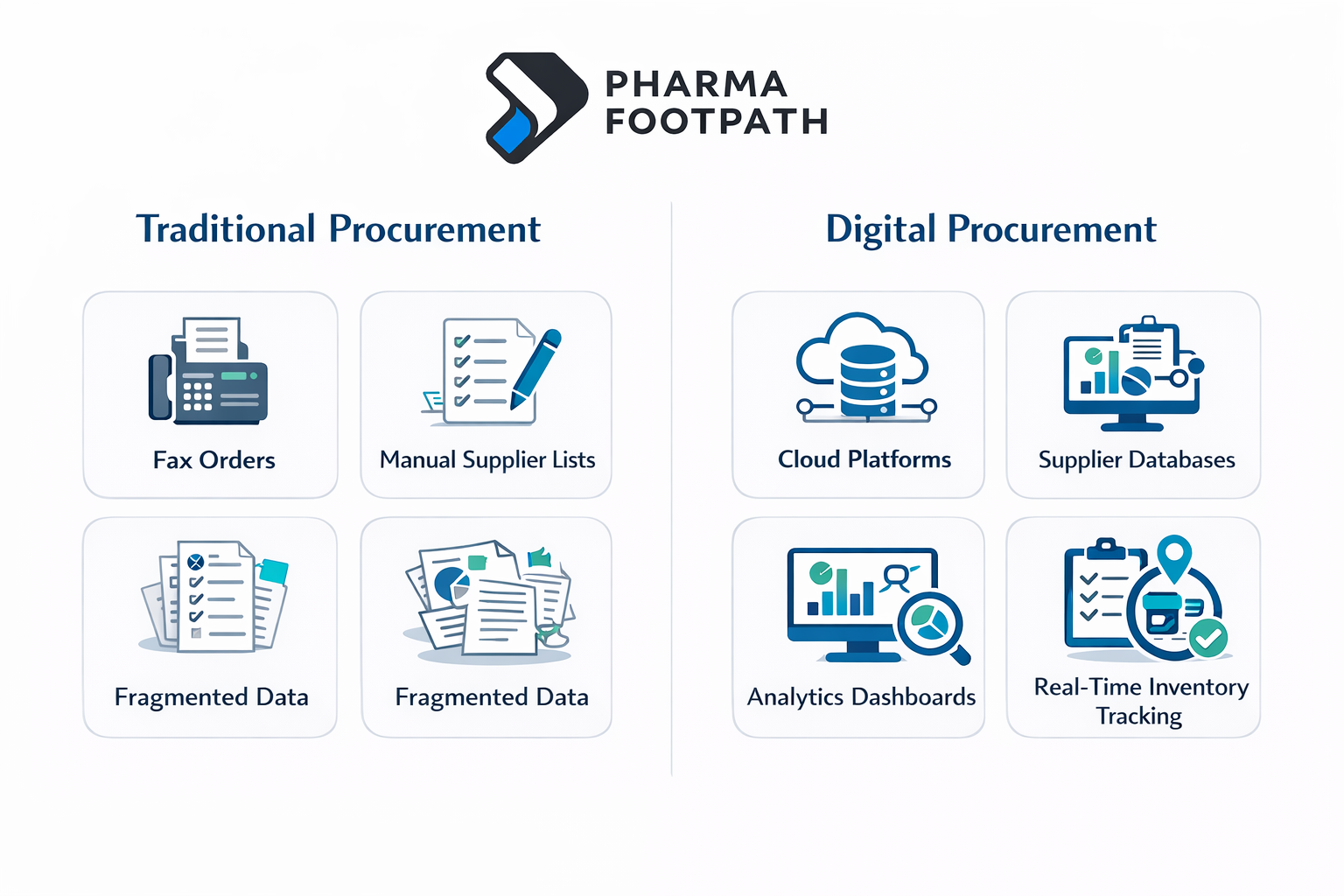
Traditional and Modern Pharmaceutical Procurement
| Traditional procurement | Modern procurement |
|---|---|
| Reliance on established supplier relationships | Structured supplier discovery and evaluation |
| Manual research across separate sources | Consolidated market and regulatory intelligence |
| Reactive response to shortages | Earlier shortage and supply-risk monitoring |
| Price-focused supplier comparison | Balanced evaluation of price, quality and reliability |
| Local or single-market visibility | Cross-market product and supplier analysis |
| Decisions recorded across emails and spreadsheets | More consistent and auditable workflows |
| Periodic supplier reviews | Ongoing supplier performance monitoring |
The objective is not to automate every decision. It is to give procurement specialists more reliable information and consistent processes for decisions that still require commercial, quality and regulatory judgment.
Core Elements of a Pharmaceutical Procurement Strategy
1. Clear product requirements
Procurement teams should define the exact product, dosage form, strength, pack configuration, required quantity and delivery conditions before evaluating suppliers.
Ambiguous requirements can lead to unsuitable quotations, delays and unnecessary supplier communication.
2. Supplier qualification
Evaluate potential suppliers against predefined commercial, regulatory, quality, and operational criteria.
Depending on the product and market, this may include:
- Appropriate licenses and authorisations
- Product traceability
- Quality-system documentation
- Distribution capabilities
- Storage and transport conditions
- Supply capacity and lead times
- Recall and complaint procedures
- Financial and operational stability
Market intelligence can help identify potential suppliers, but qualification must remain part of the organisation’s controlled procurement and quality processes.
3. Supply market intelligence
Supply market intelligence gives procurement teams a broader view of product registrations, prices, distributors, shortages and sourcing conditions across markets.
It can help answer initial questions such as:
- In which markets is the product registered?
- Are equivalent pack presentations available?
- Which distributors list the product?
- How do published prices differ between markets?
- Has the product been associated with a reported shortage?
- Are alternative sourcing routes worth investigating?
These insights help teams prioritise potential opportunities before beginning detailed due diligence.
4. Supplier diversification
Identify alternative suppliers before a disruption occurs.
However, diversification should be based on product criticality, market risk and supplier capability. Maintaining alternatives for every low-risk item may add unnecessary complexity, while failing to establish backup sources for critical products can leave an organisation exposed.
5. Cross-functional decision-making
Pharmaceutical procurement decisions often require input from procurement, quality, regulatory, finance, logistics and supply-chain teams.
Digital access to consistent market information can improve collaboration, but organisations still need clear responsibility for approval and escalation decisions.
6. Supplier performance management
Supplier evaluation should continue after onboarding.
Relevant measures may include:
- On-time and complete delivery
- Lead-time consistency
- Product availability
- Order accuracy
- Quality incidents
- Responsiveness
- Documentation accuracy
- Price and contract compliance
Performance data helps procurement teams distinguish between a supplier offering attractive terms and one that can support reliable long-term supply.
Technologies Supporting Procurement Transformation
Procurement workflow systems
Digital workflow tools can standardise requests, supplier evaluations, approvals and purchasing records. They reduce dependence on email-based processes and improve auditability.
Supply-chain analytics
Analytics can help teams identify demand patterns, supplier concentration, price changes and potential supply risks. Their value depends on the completeness and quality of the underlying data.
Automation
Automation can reduce repetitive work such as data consolidation, document routing and routine reporting. Qualified professionals should still review high-impact supplier, regulatory, and quality decisions.
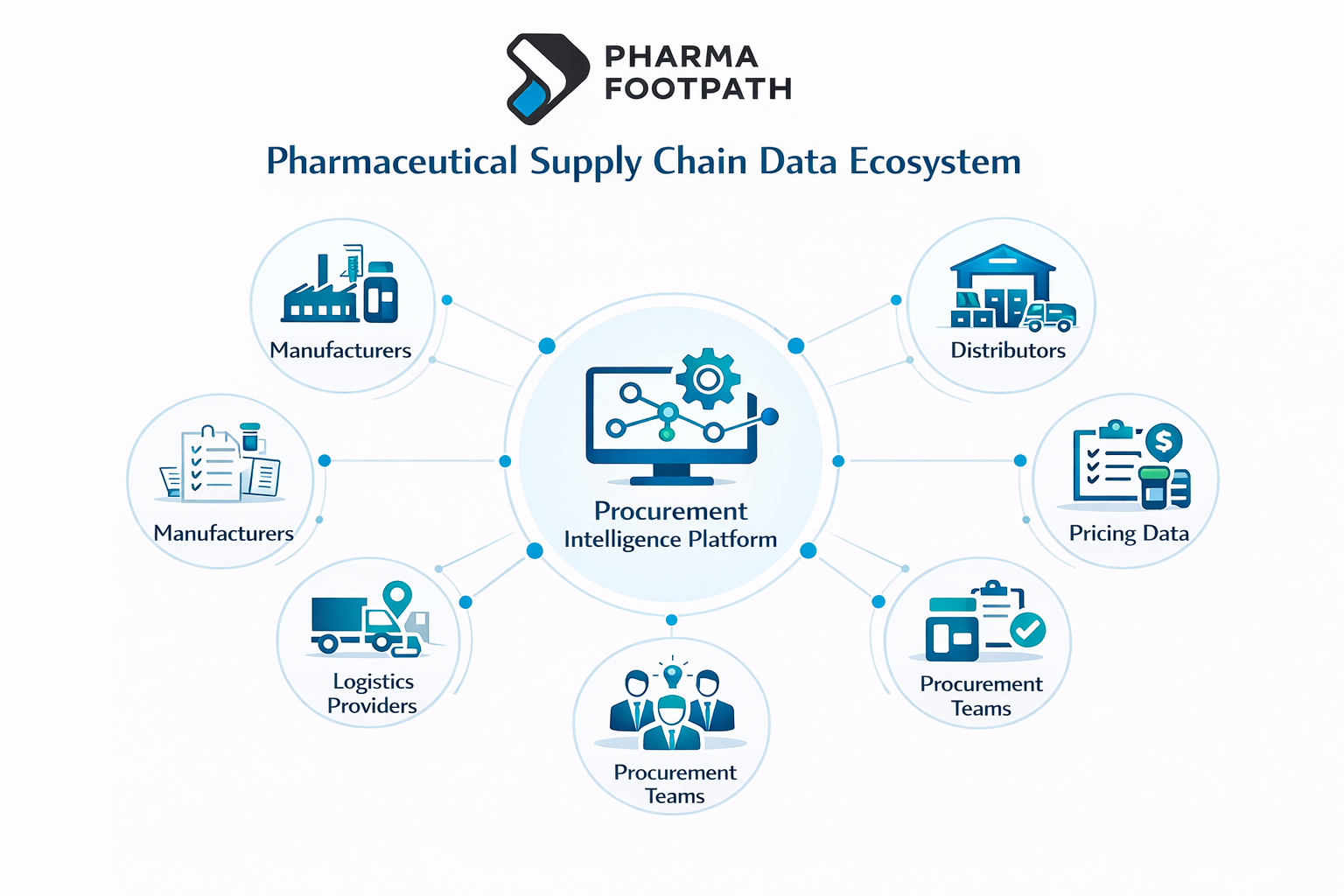
Pharmaceutical market intelligence platforms
Market intelligence platforms consolidate information that would otherwise require research across multiple national and commercial sources.
Pharma Footpath supports cross-market pharmaceutical research by bringing together product registration, price, distributor and shortage intelligence. Procurement teams can use this information to investigate markets and prioritise sourcing opportunities before moving to formal supplier qualification.
How to Build a Pharmaceutical Procurement Transformation Roadmap
Step 1: Define the business problem
Begin with a specific procurement challenge rather than a broad goal to “digitize procurement.”
Examples include:
- Slow supplier research
- Limited cross-market visibility
- Repeated supply disruptions
- Excessive dependency on a small supplier group
- Inconsistent supplier evaluation
- Fragmented pricing or registration data
Step 2: Map the existing process
Document how a sourcing request moves from product identification to final approval.
Identify where teams repeat research, wait for information, manually transfer data or use inconsistent approval criteria.
Step 3: Establish a reliable data foundation
Determine which product, supplier, price, regulatory and shortage data is required. Define who owns the information and how often to review it.
Technology will not improve decision-making if teams are working with incomplete, outdated, or poorly structured data.
Step 4: Segment products and suppliers by risk
Not every procurement category requires the same level of oversight.
Segment products by factors such as criticality, availability, regulatory complexity, spend, and supplier concentration. This lets teams apply stronger controls where supply risk is highest.
Step 5: Standardise supplier evaluation
Create consistent evaluation criteria covering commercial, quality, regulatory, and operational requirements.
The process should record why a supplier was shortlisted, rejected or approved.
Step 6: Select appropriate technology
Choose technology based on the identified workflow and information gaps.
The organisation may need procurement workflow automation, supplier management, spend analytics, market intelligence or a combination of systems. One platform does not necessarily need to perform every function.
Step 7: Pilot the new process
Test the model with a defined product category, geography or procurement team.
The pilot should provide enough evidence to identify data gaps, workflow problems and training requirements before a wider rollout.
Step 8: Measure and refine
Review performance against defined KPIs and collect feedback from the teams using the process.
Treat procurement transformation as an operating-model improvement, not a one-time technology implementation.
Pharmaceutical Procurement KPIs
The appropriate metrics depend on the organisation, but a balanced procurement scorecard may include:
| Area | Example KPIs |
|---|---|
| Supply continuity | Stockout frequency, shortage exposure, emergency orders |
| Supplier performance | On-time delivery, fulfilment rate, quality incidents |
| Process efficiency | Sourcing cycle time, approval time, manual steps |
| Commercial performance | Price variance, savings, total cost changes |
| Risk | Single-source exposure, qualified alternatives, supplier concentration |
| Data quality | Complete supplier records, current documentation, verified product data |
Do not use cost savings as the only measure of pharmaceutical procurement performance. A cheaper source provides little value if it increases quality risk, creates delivery failures, or cannot maintain supply.
Common Procurement Transformation Mistakes
Treating technology as the strategy
A platform can improve access to information and automate parts of a workflow, but it cannot define procurement priorities, risk tolerance or supplier governance.
Automating an inconsistent process
Digitising an unclear workflow can make existing problems move faster. Clarify processes and responsibilities before automating.
Focusing only on purchase price
Supplier reliability, quality, lead time, regulatory suitability and logistics can materially affect the total value and risk of a sourcing decision.
Expanding supplier lists without qualification
More potential suppliers do not automatically create greater resilience. Organisations need qualified and commercially viable alternatives.
Using poor-quality market data
Inaccurate or outdated data can create false sourcing opportunities and waste procurement resources. Consider data provenance and update frequency when selecting intelligence sources.
The Future of Pharmaceutical Procurement
Pharmaceutical procurement will continue moving toward earlier risk detection, broader market visibility, and more structured supplier decisions.
Artificial intelligence and automation will make information easier to process, but human expertise will remain essential. Procurement professionals must still interpret regulatory differences, evaluate suppliers, assess commercial feasibility and determine whether an alternative source is appropriate.
The strongest pharmaceutical procurement strategies will combine technology with disciplined supplier governance and reliable market intelligence.
For procurement teams, the goal is not simply to purchase at the lowest possible price. It is to maintain compliant and dependable supply while making well-supported commercial decisions.
Explore how Pharma Footpath supports pharmaceutical market research and procurement intelligence.
Key Takeaways
- Pharmaceutical procurement transformation extends beyond software implementation.
- Modern strategies balance price, quality, compliance and continuity of supply.
- Market intelligence can improve product, supplier and cross-market visibility.
- Supplier diversification must be supported by appropriate qualification.
- Procurement performance should be measured through risk, reliability, efficiency and commercial KPIs.
- Technology supports procurement decisions but does not replace professional due diligence.
Frequently Asked Questions
What is pharmaceutical procurement?
Pharmaceutical procurement is the controlled process of identifying, evaluating and sourcing medicines or pharmaceutical products from qualified manufacturers, wholesalers and distributors.
What is a pharmaceutical procurement strategy?
A pharmaceutical procurement strategy defines how an organisation manages product requirements, supplier selection, pricing, compliance, supply risk and procurement performance.
What is pharmaceutical procurement transformation?
Pharmaceutical procurement transformation is the coordinated improvement of procurement data, workflows, technology and supplier governance.
Why is digital procurement important in pharma?
Digital procurement can reduce manual research, improve access to market information, and create more consistent, auditable sourcing workflows.
How can pharmaceutical companies reduce procurement risk?
Organisations can reduce risk by segmenting critical products, monitoring supply conditions, qualifying alternative suppliers and measuring ongoing supplier performance.
How does market intelligence support pharmaceutical procurement?
Market intelligence helps teams compare product registrations, prices, supplier information and shortage conditions across markets. It supports initial research and opportunity assessment but does not replace regulatory review or supplier qualification.
About the Author

Phil Thomas has a varied background, including tech product management and international pharmaceutical trade. While primarily in clinical trial supply, he supported companies in unlicensed medicines, parallel trade, drug shortages, and managed access programs.
He has previously sold a big data business and served as managing director at a cybersecurity consultancy. He has a large collection of unread books, which he promises to read one day.
 pharma footpath